
Understanding Indigenous Art in European Museums
European museums have long served as repositories for cultural objects from across the globe, including a wide range of Indigenous artworks. These collections reflect centuries of exploration, trade, colonial expansion, and scholarly interest. Indigenous art within European institutions is not only valued for its aesthetic qualities but also for its cultural, spiritual, and historical significance. Increasingly, museums are re-evaluating how these works are preserved, interpreted, and displayed, with a growing emphasis on cultural accuracy and ethical responsibility.
Indigenous art encompasses a diverse array of forms, materials, and meanings. Objects may include ceremonial items, textiles, carvings, paintings, and tools, each embedded with knowledge systems and cultural narratives. European museums are now attempting to move beyond earlier approaches that often treated such works as ethnographic curiosities, instead recognizing them as dynamic expressions of living cultures. This shift shapes both preservation strategies and exhibition practices.
Preservation Methods
Preserving Indigenous art requires an understanding of both material science and cultural context. Many items are made using organic materials that are particularly sensitive to environmental changes, such as fluctuations in temperature, humidity, and light exposure. As a result, museums must adopt highly controlled preservation environments.
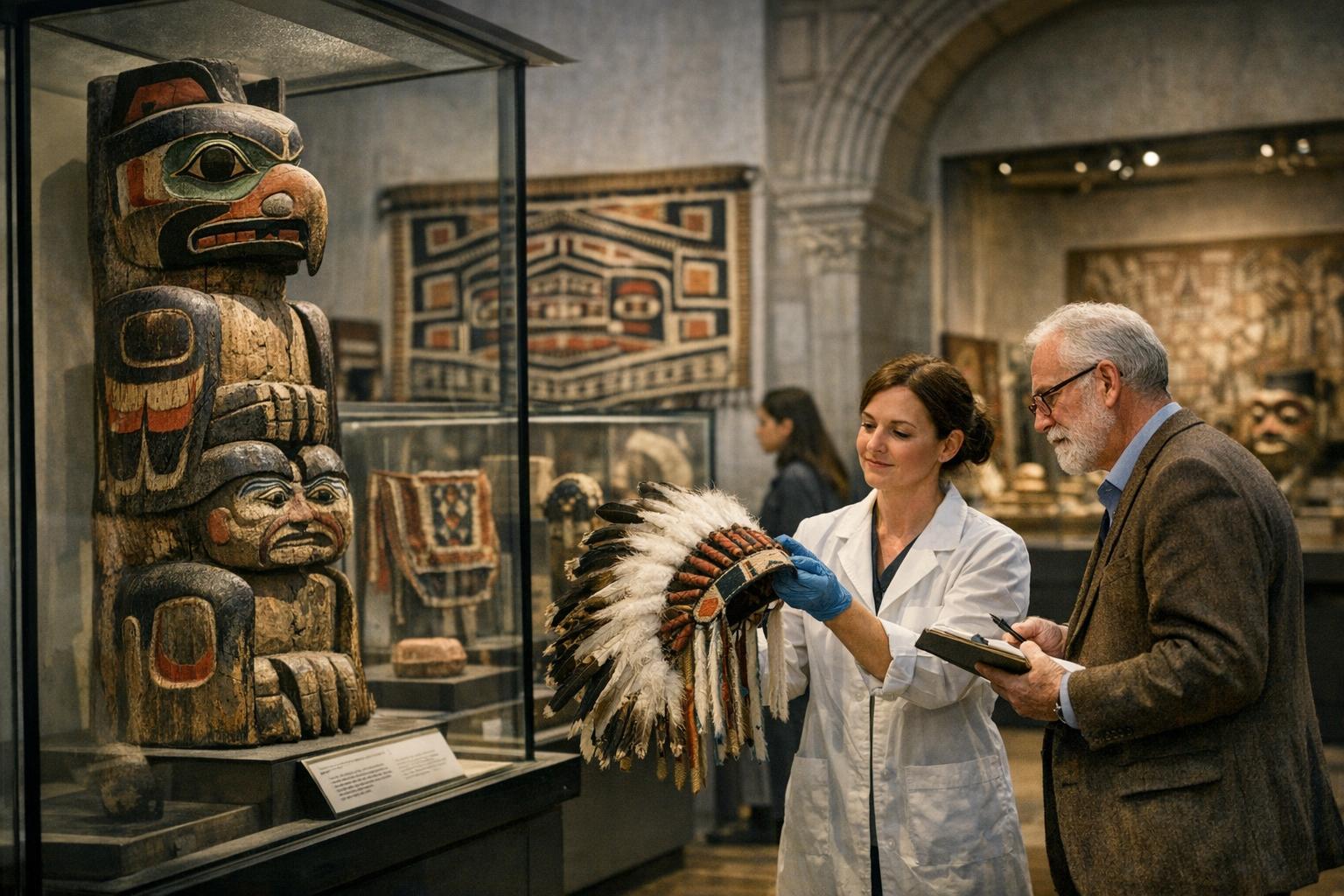
Conservation Practices: Specialized conservation teams are responsible for maintaining the physical integrity of Indigenous artworks. These professionals study the original materials and techniques used by artists in order to apply appropriate conservation methods. For example, wooden carvings may require stable humidity levels to prevent cracking, while textiles dyed with natural pigments must be protected from light to avoid fading. Conservation efforts often involve minimal intervention, prioritizing stabilization over restoration to preserve the authenticity of the object.
In addition, conservation is informed by cultural considerations. Some items were not originally intended to last indefinitely, or they may have been designed for specific ceremonial uses. Museums increasingly consider whether preservation aligns with the cultural values associated with the object, sometimes consulting communities on how best to care for these works.
Documentation and Research: Alongside physical preservation, documentation plays a central role in maintaining the integrity of Indigenous collections. Detailed records include information about the object’s origin, materials, cultural function, and acquisition history. This research is essential for contextualizing the artwork and addressing gaps in provenance, particularly for items collected during colonial periods.
Museums frequently collaborate with Indigenous scholars, artists, and community representatives to enrich their understanding of these objects. Oral histories and traditional knowledge provide perspectives that cannot be derived from physical analysis alone. This collaborative research helps correct earlier misinterpretations and ensures that exhibitions reflect more accurate cultural narratives.
Displaying Indigenous Art
Exhibiting Indigenous art presents distinct challenges. Museums must balance the goal of public accessibility with the responsibility to present works in a culturally respectful and meaningful way. Display strategies have evolved to move beyond purely aesthetic presentations toward more contextualized interpretations.
Curatorial Practices: Curators increasingly adopt approaches that situate artworks within their cultural, historical, and social frameworks. Rather than isolating objects in glass cases with minimal explanation, exhibitions now often include detailed narratives, multimedia elements, and references to the communities from which the works originate. This contextualization allows visitors to understand not only how an object looks, but also what it represents and how it functions within a cultural system.
In many cases, Indigenous artists and cultural advisors are directly involved in curatorial decisions. Their contributions influence how objects are grouped, described, and interpreted. This collaborative approach helps avoid misrepresentation and acknowledges that Indigenous communities retain authority over their cultural heritage.
Engagement and Education: Educational programs are a central component of how museums present Indigenous art. These initiatives aim to provide visitors with a deeper understanding of the cultural and historical contexts of the works on display. Guided tours, lectures, and workshops often address topics such as traditional craftsmanship, symbolism, and contemporary Indigenous perspectives.
Interactive exhibits have also become more common, allowing visitors to engage with digital reconstructions or audiovisual materials. For example, recordings of songs, storytelling, or ceremonial practices can accompany physical objects, offering a more comprehensive representation of their significance. Educational outreach frequently extends beyond the museum itself, involving partnerships with schools and community organizations.
Collaborative Efforts with Indigenous Communities
Collaboration has become a central principle in the management of Indigenous collections. Museums increasingly recognize that Indigenous communities should play an active role in decisions that affect how their cultural heritage is preserved and displayed.
Partnerships and Consultations: Many institutions now establish ongoing relationships with Indigenous groups connected to their collections. These partnerships may involve consultations on exhibition design, interpretation, and conservation practices. Community representatives may also contribute to exhibition texts, ensuring that descriptions reflect Indigenous perspectives rather than solely academic viewpoints.
Such collaborations can take different forms, from advisory panels to co-curated exhibitions. In some cases, Indigenous artists create new works that respond to historical objects within the collection, establishing a dialogue between past and present. These practices acknowledge that Indigenous cultures are not static but continue to evolve.
Repatriation and Cultural Sensitivity: The question of ownership remains a significant issue for many Indigenous artifacts held in European museums. Repatriation, or the return of objects to their communities of origin, has become a prominent topic in cultural policy discussions. Some museums have begun to return items that were acquired without consent or under questionable circumstances.
Beyond formal repatriation, museums also address cultural sensitivity in how objects are displayed. Certain items may be considered sacred or restricted, meaning they should not be viewed publicly or photographed. Museums increasingly respect these restrictions, sometimes limiting access or modifying exhibitions accordingly. These practices reflect a broader commitment to ethical stewardship.
Challenges and Future Directions
Despite ongoing efforts, European museums continue to face challenges in managing Indigenous collections. These challenges involve not only technical issues but also broader questions about representation, authority, and historical accountability.
Balancing Access and Preservation: Public access remains a fundamental goal for museums, yet it can conflict with preservation needs. Exposure to light, fluctuations in climate, and physical proximity to visitors can accelerate the deterioration of sensitive materials. Museums must carefully design exhibition spaces to minimize these risks, often rotating objects or using replicas to reduce strain on original items.
At the same time, limiting access can restrict opportunities for education and engagement. Institutions must therefore find ways to make collections accessible without compromising their long-term preservation.
Technology Integration: Digital technologies are playing an increasingly important role in addressing these challenges. High-resolution imaging, 3D scanning, and virtual exhibitions allow museums to share their collections with a global audience while reducing the need for physical handling. Digital archives also provide opportunities for Indigenous communities to access and interact with cultural objects that may be geographically distant.
However, technology raises its own questions, particularly regarding data ownership and cultural control. Museums must ensure that digital representations of Indigenous art are managed in ways that respect community preferences and intellectual property rights.
Looking ahead, the future of Indigenous art in European museums will likely involve deeper collaboration, more transparent practices, and continued reassessment of institutional roles. Museums are gradually shifting from being sole authorities on cultural interpretation to acting as facilitators of dialogue. This transition requires ongoing engagement with Indigenous communities and a willingness to adapt established practices.
By strengthening preservation techniques, refining curatorial approaches, and prioritizing ethical considerations, European museums are working toward a more informed and responsible presentation of Indigenous art. These efforts contribute to a broader understanding of cultural diversity and highlight the importance of respecting the knowledge systems embedded within these works.