
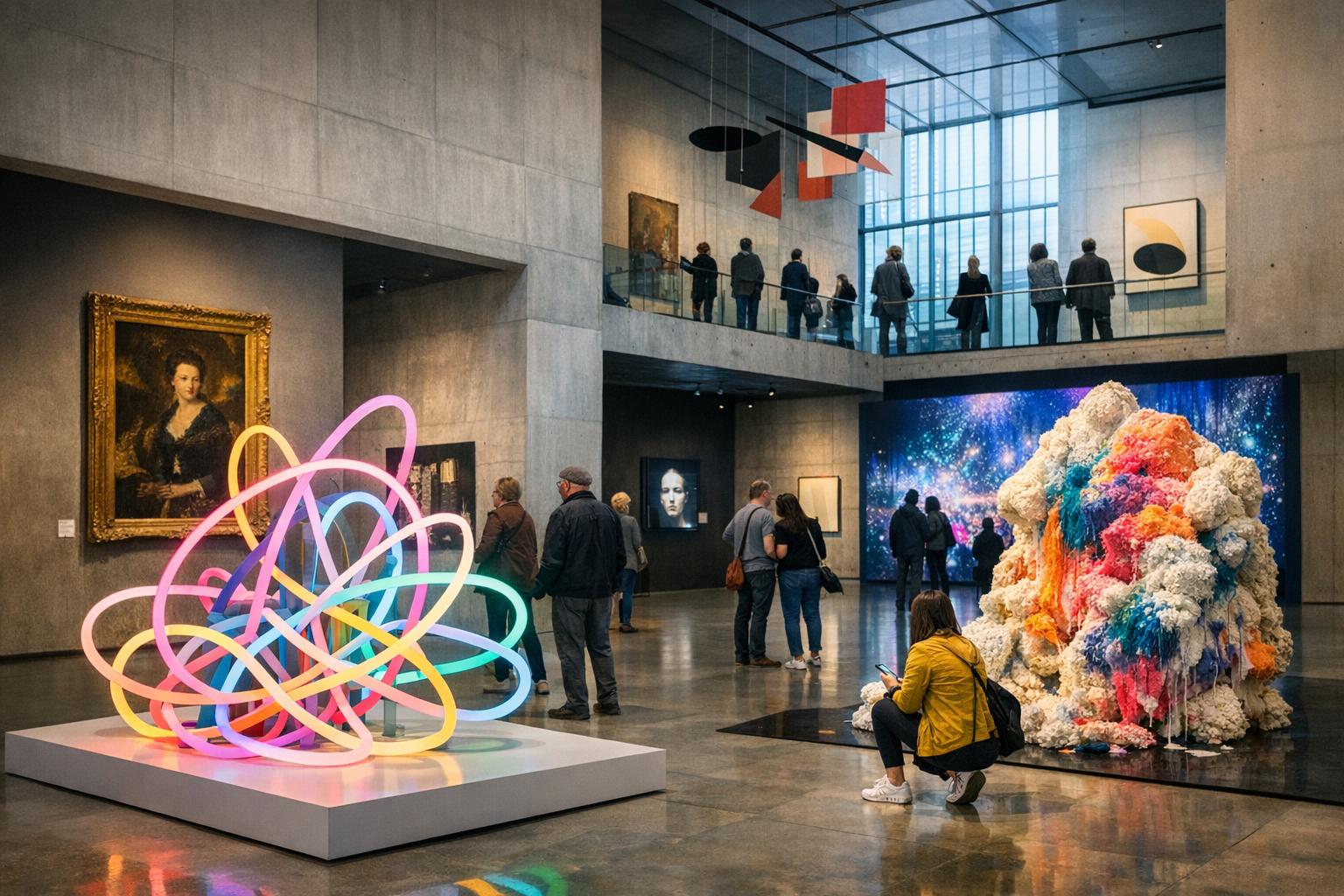
Introduction to Modern Art Museums
Modern art museums across Europe are reshaping the traditional understanding of art in ways that extend beyond exhibition alone. These institutions no longer function solely as repositories of objects; instead, they operate as platforms for ongoing dialogue, experimentation, and critical reflection. By integrating innovative curatorial practices and embracing diverse forms of expression, they challenge established hierarchies that once defined artistic value. This shift mirrors broader transformations in society, where ideas of identity, technology, and global interconnectedness influence how art is produced and received.
In this evolving context, museums increasingly emphasize process over permanence. Art is not always presented as a finished product but often as something provisional, open to reinterpretation. Visitors are encouraged to view works not as isolated artifacts but as part of larger cultural, political, and technological frameworks. As a result, the modern art museum becomes a site where interpretation is active rather than passive, and where meaning is negotiated rather than fixed.
Breaking Boundaries
Modern art museums frequently challenge traditional boundaries by presenting works that resist easy classification. The distinction between painting, sculpture, film, and performance has become less rigid, reflecting the fluidity of contemporary artistic practice. Institutions such as Centre Pompidou in Paris and Tate Modern in London have played a prominent role in foregrounding this shift by curating exhibitions that blur disciplinary lines.
Digital media has become particularly influential in redefining artistic boundaries. Video installations, algorithm-driven artworks, and virtual reality experiences complicate the notion of authorship and materiality. In such works, the artwork may evolve over time or respond to audience input, making each viewing unique. Performance art further disrupts conventional expectations by emphasizing temporality and bodily presence, often leaving behind only documentation.
This expanded understanding of art challenges viewers to reconsider long-held assumptions. Rather than asking whether something qualifies as art based on medium or technique, audiences are encouraged to engage with the underlying ideas and contexts. Museums facilitate this process by offering interpretive frameworks that situate artworks within broader conversations about culture, technology, and society.
Interdisciplinary Approach
An important feature of modern art museums is their adoption of an interdisciplinary approach. Artistic production today frequently intersects with fields such as environmental science, artificial intelligence, and sociology. Museums respond by curating exhibitions that integrate these domains, creating spaces where multiple forms of knowledge intersect.
The Museu d’Art Contemporani in Barcelona, for example, has developed projects that connect artistic inquiry with scientific research. Such collaborations might explore topics like climate change, urban development, or data ethics. By framing these issues through artistic practice, museums encourage visitors to consider them from alternative perspectives that differ from purely academic or technical analyses.
This approach also reflects a broader shift in how knowledge is organized. Instead of isolating disciplines, modern institutions emphasize connections and interdependencies. Art becomes a means of translating complex ideas into forms that are accessible yet thought-provoking. In this sense, the museum functions as both an educational space and a site of intellectual exchange.
Interactive and Immersive Experiences
Interactivity has become a defining characteristic of many modern art museums. Unlike traditional galleries, where visitors are expected to observe quietly, contemporary institutions often invite participation. This shift acknowledges that engagement can deepen understanding and create more memorable encounters with art.
Interactive installations may involve physical movement, digital interfaces, or sensory immersion. At the Museum of Contemporary Art Kiasma in Helsinki, for instance, visitors encounter works that respond to their presence, altering light, sound, or visual elements in real time. These experiences transform the audience from spectators into active participants, making their role essential to the realization of the artwork.
Immersive environments further expand this dynamic by surrounding visitors with integrated visual and auditory elements. Such installations can create a sense of displacement or heightened awareness, prompting reflection on perception itself. While these experiences can be engaging, they also raise questions about the balance between spectacle and critical depth. Museums must navigate this tension carefully to ensure that interactivity enhances rather than obscures the conceptual dimensions of art.
Redefining Art Spaces
The architecture of modern art museums plays a crucial role in shaping how art is experienced. Contemporary museum design often departs from traditional layouts, favoring open, flexible spaces that can accommodate a wide range of artistic forms. This adaptability is essential for exhibiting works that vary significantly in scale, medium, and duration.
The Fondation Louis Vuitton in Paris exemplifies this approach through its innovative architectural design. The building’s fluid forms and expansive galleries allow for dynamic installations while also functioning as a visual statement in its own right. Architecture here is not merely a container for art but an integral part of the artistic experience.
These redesigned spaces also influence visitor behavior. Open layouts encourage movement and exploration, while carefully considered lighting and acoustics shape perception. Museums increasingly consider how spatial design can facilitate interaction, contemplation, and accessibility. In doing so, they move beyond static displays toward environments that are responsive to both artworks and audiences.
Global Perspectives and Inclusivity
A significant development in modern art museums is the emphasis on global perspectives and inclusivity. Historically, many European institutions focused primarily on Western art traditions, often marginalizing other voices. Contemporary museums are actively working to address these imbalances by showcasing artists from diverse cultural and geographic backgrounds.
Institutions such as Mudam Luxembourg collaborate with international artists to present a broader spectrum of artistic practices. This shift is not limited to representation but extends to curatorial strategies that question established narratives. Exhibitions may explore themes such as migration, identity, and postcolonial history, encouraging visitors to consider how art reflects and shapes global dynamics.
Inclusivity also involves rethinking accessibility. Museums are increasingly attentive to barriers related to language, physical ability, and socioeconomic factors. Multilingual resources, adaptive technologies, and community-oriented programming aim to create more equitable access to cultural experiences. These efforts reflect a recognition that public institutions have a responsibility to serve diverse audiences.
Engaging with Communities
Modern art museums are placing greater emphasis on their relationship with local communities. Rather than functioning as isolated cultural centers, they seek to establish ongoing connections with the public. This engagement often takes the form of educational initiatives, collaborative projects, and outreach programs.
The MAXXI in Rome provides an example of this approach through its range of public programs. Workshops, lectures, and participatory events invite individuals from different backgrounds to engage with contemporary art in meaningful ways. These initiatives help demystify artistic practices and encourage broader participation.
Community engagement also influences curatorial decisions. Museums may collaborate with local artists or incorporate community narratives into exhibitions, ensuring that programming reflects the contexts in which they operate. This reciprocal relationship strengthens the relevance of the institution while fostering a sense of shared ownership.
Conclusion
Modern art museums in Europe are undergoing significant transformation, redefining both the nature of art and the role of cultural institutions. By embracing new media, interdisciplinary collaboration, and interactive engagement, they challenge conventional definitions and expand the possibilities of artistic expression. At the same time, their commitment to inclusivity and community involvement reflects a broader effort to align with contemporary social values.
These developments indicate that the museum is no longer a static space dedicated solely to preservation. Instead, it functions as an evolving environment where ideas are tested, questioned, and reinterpreted. As artistic practices continue to change, modern art museums will likely remain central to shaping how art is understood and experienced in a rapidly shifting cultural landscape.