
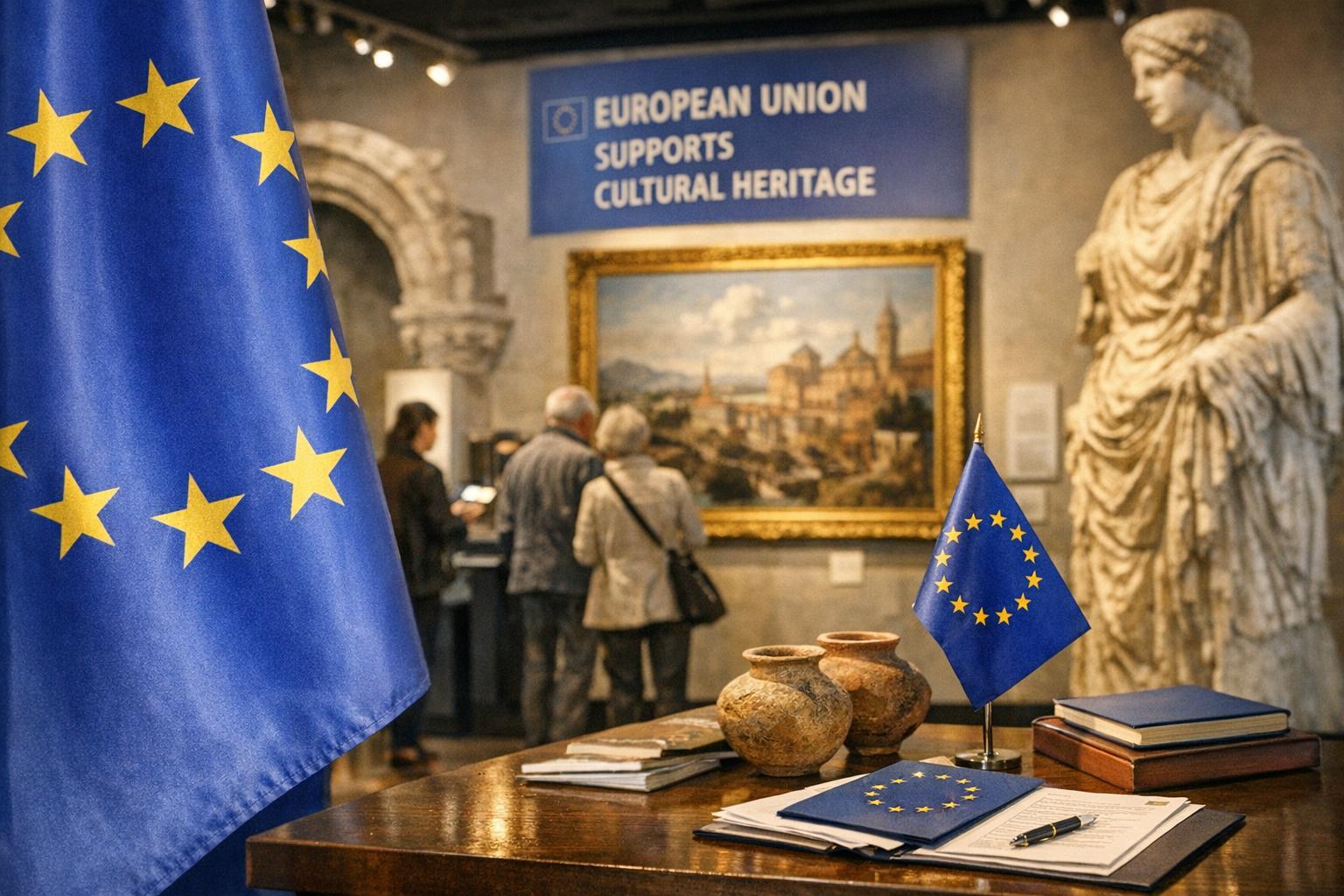
The Role of the European Union in Supporting Museums and Cultural Heritage
The European Union (EU) has developed a structured and multi-layered approach to preserving and promoting cultural heritage across its member states. This effort reflects the understanding that cultural heritage is not only a record of the past but also a resource that contributes to education, research, tourism, and social cohesion. Museums, archives, and historical sites operate within this broader framework, supported by policy coordination, financial instruments, and collaborative networks established at the European level.
Cultural heritage in Europe is diverse, spanning archaeological sites, historic buildings, intangible traditions, and extensive museum collections. The EU does not replace national cultural policies, but it complements them by facilitating cooperation, offering funding, and establishing shared standards. This approach allows member states to retain sovereignty over cultural matters while benefiting from collective resources and strategies.
EU Funding Programs and Initiatives
Financial support remains one of the most visible ways in which the EU contributes to the cultural sector. Programs such as Creative Europe are central to this effort. Creative Europe provides funding for cooperation projects, networks, and platforms that connect cultural operators across borders. Museums benefit from these initiatives by participating in joint exhibitions, staff exchanges, and collaborative research that would be difficult to organize independently.
A key feature of Creative Europe is its emphasis on cross-border collaboration. By encouraging institutions to work together, the program supports the circulation of cultural works and professional expertise. Museums can share best practices in conservation, exhibition design, and audience engagement, improving standards across the region.
In parallel, the Horizon Europe program expands opportunities for museums through research and innovation funding. Many projects funded under this framework explore advanced conservation techniques, climate impact mitigation, and new ways to interpret cultural heritage using scientific methods. Museums increasingly participate as research partners, contributing their collections and expertise to interdisciplinary teams.
Another important funding mechanism is the European Regional Development Fund (ERDF), which supports infrastructure projects. This includes the restoration of historic buildings, modernization of museum facilities, and development of cultural tourism routes. These investments often have a regional focus, helping smaller communities leverage cultural heritage as part of economic development strategies.
Digital Innovation and Access
Digital transformation has become a central aspect of EU cultural policy. The Europeana platform is a prominent example of how digital tools are used to expand access to cultural heritage. By aggregating digitized materials from thousands of institutions, Europeana provides public access to artworks, manuscripts, photographs, and audiovisual materials from across Europe.
Digitization serves multiple purposes. It enhances accessibility for users who cannot visit physical institutions, supports educational use, and creates backup records that can be used in case of damage or loss. For museums, participation in digital platforms also increases visibility and encourages collaboration.
The EU has also supported the development of technologies such as 3D scanning, virtual reality, and artificial intelligence for cultural heritage applications. These tools allow museums to reconstruct damaged artifacts, create immersive exhibitions, and analyze large collections more efficiently. While not all institutions have the same level of technological capacity, EU-funded projects often aim to bridge this gap by sharing tools and knowledge.
Digital access is also linked to standardization efforts. The EU promotes common metadata standards and interoperability, ensuring that collections from different countries can be integrated into shared systems. This technical coordination is essential for large-scale digital initiatives like Europeana.
Legal and Policy Framework
Beyond funding, the EU provides a regulatory environment that supports the protection of cultural heritage. One significant measure is the EU Regulation on the Import of Cultural Goods, which aims to prevent the illegal trade of artifacts. By requiring documentation and proof of legal export from the country of origin, the regulation addresses concerns about looting and illicit trafficking.
The EU also issues directives and recommendations related to cultural heritage preservation. These include guidelines on the conservation of historic sites, protection against environmental risks, and integration of cultural heritage into urban planning. While implementation remains the responsibility of member states, EU-level coordination encourages consistency.
Another aspect of policy development involves crisis response. The EU has mechanisms to support cultural heritage affected by natural disasters or armed conflict. This includes funding for restoration and expertise sharing to assist in recovery efforts.
Intellectual property policies also play a role. Museums and cultural institutions must navigate copyright laws when digitizing and sharing collections. The EU has worked toward harmonizing certain aspects of copyright legislation, making it easier for institutions to operate across borders while protecting creators’ rights.
International Cooperation
The EU’s role in cultural heritage extends beyond its own borders through partnerships with international organizations and third countries. Cooperation with UNESCO is particularly important, especially in relation to World Heritage Sites and conventions on the protection of cultural property.
Through external cultural relations policies, the EU supports heritage preservation projects in regions affected by conflict or economic challenges. These initiatives often involve training, capacity building, and technical assistance. The objective is not only to safeguard physical heritage but also to strengthen local institutions and governance.
International cooperation also facilitates the exchange of knowledge and standards. European museums collaborate with counterparts worldwide on conservation methods, exhibition practices, and research. These partnerships contribute to a broader understanding of cultural heritage as a shared global resource rather than a set of isolated national assets.
In addition, the EU promotes dialogue through cultural diplomacy. Exhibitions, academic exchanges, and joint projects are used to build connections between societies. Museums play a central role in these efforts by serving as platforms for cultural representation and interpretation.
For further details on how the EU supports museums and cultural heritage, you can visit the European Commission’s website on Culture for comprehensive information and updates on ongoing initiatives and programs.