
Open-Air Museums: A Unique Look at History
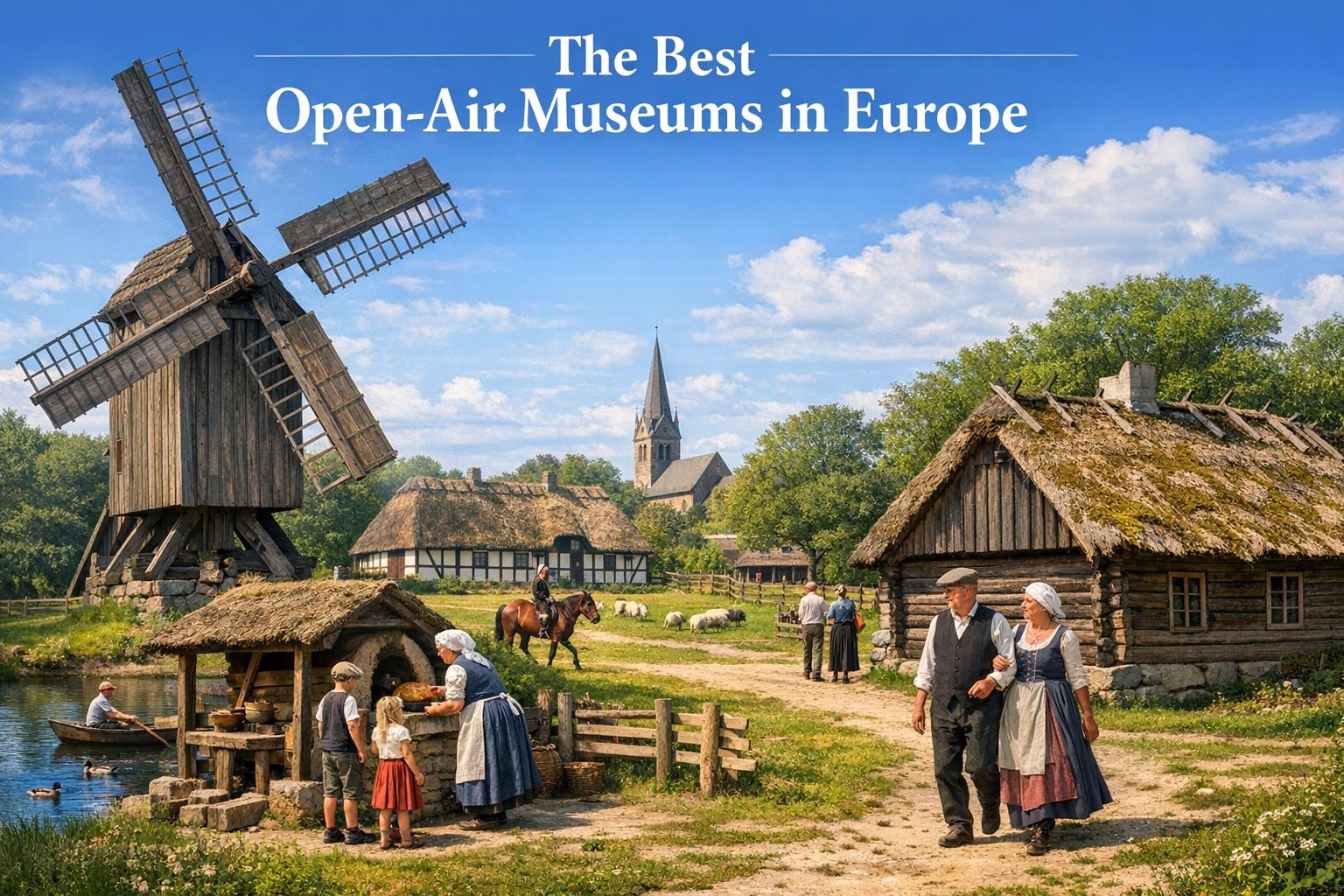
Open-air museums provide a distinctive opportunity to experience history and culture outside of traditional indoor gallery settings. Rather than viewing artifacts behind glass, visitors move through reconstructed environments where buildings, landscapes, and daily activities are presented together. This format allows historical contexts to be interpreted in a more comprehensive way, connecting architecture, social customs, and material culture. Across Europe, open-air museums have become important centers for education and preservation, offering insights into regional traditions that might otherwise be difficult to visualize.
Unlike conventional museums that isolate objects, open-air institutions emphasize contextual authenticity. Original structures are often relocated to a single site and reassembled with careful attention to historical accuracy. Furnishings, tools, and decorative elements are displayed within these buildings, providing a realistic impression of how people lived and worked. Many museums also incorporate live demonstrations, where staff or craftspeople recreate historical processes such as blacksmithing, weaving, or farming. This combination of static and dynamic elements makes open-air museums particularly effective at illustrating everyday life across different periods.
The Skansen Open-Air Museum, Sweden
Situated in Stockholm, Skansen is widely recognized as the first open-air museum in the world. Established in 1891 by Artur Hazelius, it was created with the goal of preserving Swedish rural life during a period of rapid industrialization. The museum features more than 150 historic buildings that have been transported from various parts of Sweden, representing different regions and social classes. Visitors can explore farmsteads, manor houses, and workshops, each arranged to reflect a specific historical setting.
Skansen is notable for its integration of cultural and natural heritage. In addition to architectural displays, the museum includes a zoo featuring Nordic animals, which helps contextualize the relationship between people and their environment. Seasonal programs play a key role in its interpretation strategy. Traditional celebrations such as Midsummer and Christmas are recreated on-site, allowing visitors to observe historical customs as they would have been practiced. Educational programming, including guided tours and craft demonstrations, further supports its role as a living museum.
The Hungarian Open Air Museum, Hungary
Located near Szentendre, the Hungarian Open Air Museum presents a detailed overview of Hungary’s rural architecture and folk traditions. Established in the late 20th century, the museum is organized into regional units that represent different parts of the country. Each section includes carefully reconstructed villages with houses, barns, churches, and public buildings arranged to reflect authentic settlement patterns.
One of the defining features of this museum is its focus on regional diversity. Hungary’s varied geography and cultural influences are reflected in differences in building techniques, decorative styles, and daily practices. Visitors can observe how communities adapted to local conditions through architecture and land use. Exhibits also address social structures, including the roles of family, religion, and agriculture in shaping village life. Demonstrations of crafts such as pottery and embroidery provide additional insight into traditional skills that supported rural economies.
The museum also integrates modern interpretive methods, including interactive displays and thematic exhibitions that examine broader historical developments. This approach allows it to connect localized experiences with national history, offering a more comprehensive understanding of Hungary’s cultural evolution.
The Black Forest Open Air Museum, Germany
Germany’s Black Forest Open Air Museum, located in Gutach, focuses on the rural heritage of the Black Forest region. The museum includes several large farmhouses that date from the 16th to 19th centuries, each representing a distinct architectural style associated with specific valleys. These buildings are notable for their size and multifunctional design, often combining living quarters, barns, and storage areas تحت a single roof.
The museum emphasizes self-sufficiency as a defining characteristic of traditional Black Forest life. Exhibits show how families produced food, managed forests, and maintained equipment in relatively isolated conditions. Demonstrations of activities such as bread baking, milling, and timber work help illustrate the technical knowledge required to sustain rural households.
In addition to its historical displays, the museum addresses environmental factors that shaped regional architecture. Roof designs, for example, were adapted to withstand heavy snowfall, while construction materials were sourced locally. This focus on the interaction between human activity and natural conditions provides valuable insight into how communities responded to environmental challenges over time.
The Beamish Museum, England
Located in County Durham, the Beamish Museum offers a large-scale reconstruction of life in North East England during the 19th and early 20th centuries. Unlike many open-air museums that concentrate on rural settings, Beamish includes urban and industrial environments. Visitors can explore a recreated town with shops, a school, and public buildings, as well as a working colliery and railway system.
A distinctive aspect of Beamish is its use of costumed interpreters who engage directly with visitors while performing everyday tasks. This method enhances interpretation by providing opportunities for dialogue and demonstration. Rather than simply observing static displays, visitors can interact with individuals who explain historical practices from a first-person perspective.
Beamish also places strong emphasis on social history, examining the experiences of working-class communities during a period of industrial expansion. Exhibits address topics such as labor conditions, public health, and technological change. By presenting both domestic and industrial environments, the museum illustrates the interconnected nature of work and daily life in this region.
The Norwegian Museum of Cultural History, Norway
Also known as Norsk Folkemuseum, this institution in Oslo presents a comprehensive survey of Norwegian cultural history. With more than 150 traditional buildings, it is one of the largest open-air museums in Europe. The collection includes structures from both rural and urban environments, spanning several centuries.
One of the most significant features of the museum is the Gol Stave Church, a wooden structure dating back to the 13th century. Its inclusion highlights the importance of religious architecture in Norwegian history and demonstrates advanced carpentry techniques. The museum also presents examples of urban housing, offering a broader perspective that goes beyond rural traditions.
Norsk Folkemuseum is known for its attention to long-term historical development. Exhibits trace changes in housing, clothing, and social organization from early periods through modern times. Seasonal events and cultural programs further enhance interpretation, allowing visitors to observe how traditions have been maintained or adapted over time.
Conclusion
Open-air museums provide a form of historical interpretation that combines physical environment, material culture, and lived experience. By reconstructing buildings and landscapes, they offer a more integrated view of the past than conventional exhibitions. Institutions such as Skansen, the Hungarian Open Air Museum, the Black Forest Open Air Museum, Beamish, and Norsk Folkemuseum demonstrate how regional histories can be preserved and communicated through immersive settings.
These museums also serve an important role in cultural preservation, particularly in the context of modernization and globalization. By maintaining traditional structures and practices, they create opportunities for education and research while ensuring that local identities remain visible. Their continued development reflects an ongoing interest in understanding how people have adapted to social, economic, and environmental changes across different regions of Europe.