
Introduction
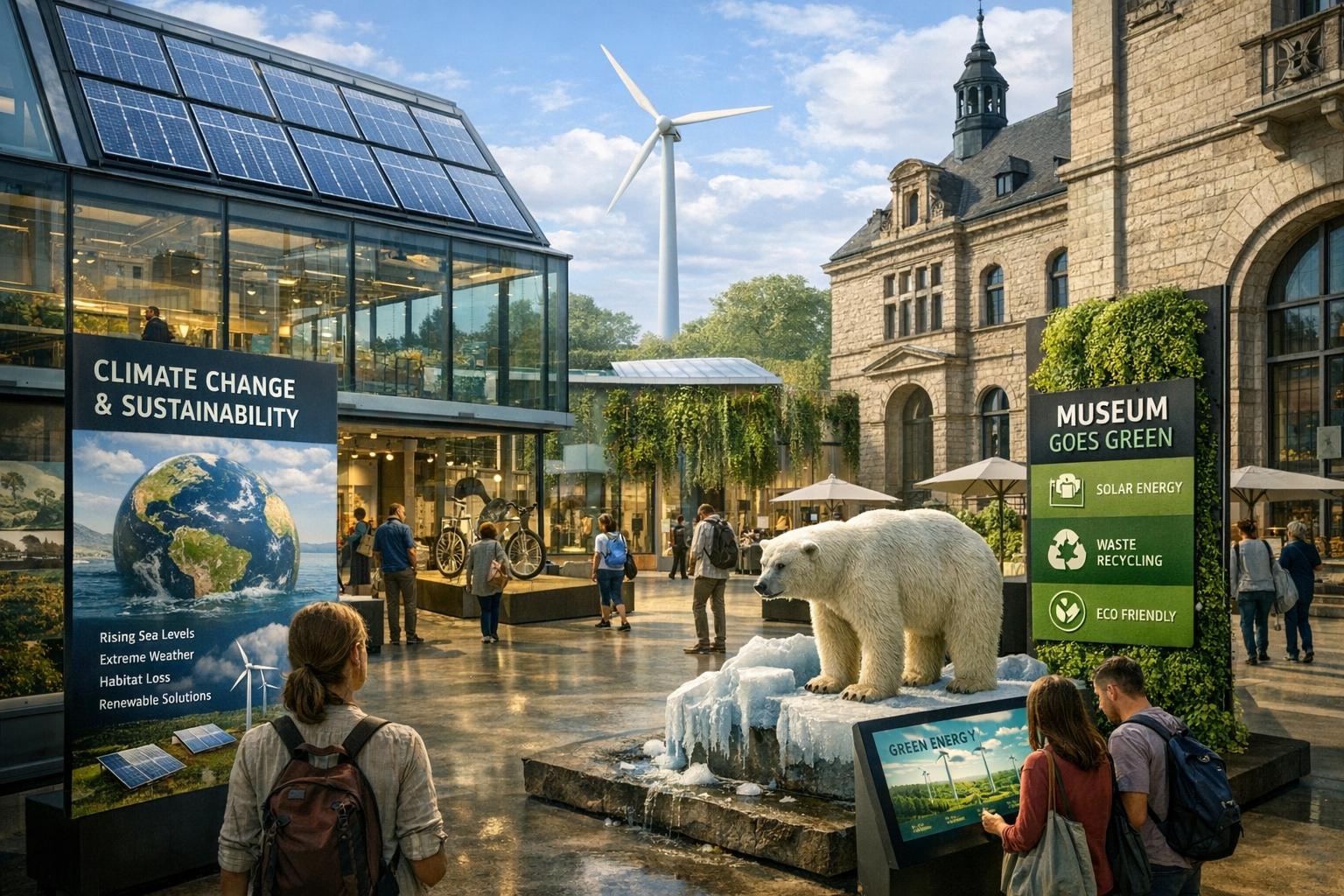
In recent years, museums across Europe have increasingly recognized their role in addressing climate change and promoting sustainability. This shift reflects a broader transformation in how cultural institutions define their responsibilities within society. Museums are no longer viewed solely as repositories of historical artifacts; they are also platforms for dialogue, research, and public engagement on urgent global issues. Climate change, with its wide-ranging environmental, social, and economic impacts, has become a central theme in this evolving mission.
By integrating sustainability into both their public-facing activities and internal operations, museums contribute to a wider cultural understanding of environmental responsibility. Their influence extends beyond exhibitions, shaping visitor attitudes and encouraging behavioral change. As trusted institutions, museums are positioned to translate complex scientific concepts into accessible knowledge while fostering critical thinking about environmental challenges.
Museum Initiatives on Climate Change
European museums have demonstrated growing commitment to climate-related topics through exhibitions that address both the science and the societal implications of environmental change. These exhibitions often combine scientific data with visual storytelling, allowing visitors to grasp abstract concepts through tangible examples. Interactive displays, immersive installations, and digital technologies are commonly used to enhance engagement and comprehension.
Collaboration plays an important role in these initiatives. Museums frequently partner with climate scientists, universities, and environmental organizations to ensure the accuracy and relevance of their content. This interdisciplinary approach enables institutions to present climate change not only as a scientific issue but also as a cultural and historical phenomenon influenced by human activity.
Temporary exhibitions are particularly effective in responding to current developments. They allow museums to update content regularly and address emerging topics such as biodiversity loss, rising sea levels, or sustainable urban development. In addition, permanent galleries are increasingly being redesigned to incorporate environmental perspectives within broader narratives, ensuring that sustainability is not treated as an isolated subject.
Educational programming complements these exhibitions. Workshops, guided tours, and public lectures provide opportunities for deeper engagement, encouraging visitors to consider practical steps toward sustainability. By connecting global issues to everyday experiences, museums help make climate change more relatable and actionable.
Sustainable Practices in Museum Operations
The commitment to sustainability extends beyond exhibition content into the operational frameworks of museums. Many institutions have undertaken significant changes to reduce their environmental impact. Energy consumption is a primary area of focus, with museums adopting energy-efficient lighting systems such as LED technology and implementing climate control systems that balance conservation requirements with reduced energy use.
Renewable energy sources are increasingly integrated into museum infrastructure. Solar panels, geothermal systems, and renewable energy contracts are being used to power buildings while lowering carbon emissions. These changes not only reduce environmental impact but also demonstrate institutional accountability.
Material use and waste management are also key considerations. Museums are rethinking exhibition design to minimize waste by using recyclable or reusable materials. Temporary structures are often designed for disassembly and reuse, reducing the need for new resources. Waste reduction programs, including recycling and composting initiatives, are becoming standard practice.
Water conservation measures, such as efficient plumbing systems and rainwater harvesting, are also being implemented in some institutions. Additionally, museums are evaluating their supply chains, prioritizing vendors and partners who adhere to sustainable practices. These operational changes reflect a comprehensive approach that aligns institutional behavior with the environmental messages presented to the public.
Green Certifications and Partnerships
To formalize their sustainability efforts, many museums pursue recognized green certifications. These certifications provide structured frameworks for assessing environmental performance and require ongoing monitoring and reporting. Achieving such certifications signals a commitment to measurable and transparent practices, strengthening institutional credibility.
Partnerships further support sustainability goals. Collaborations with environmental organizations, research institutions, and governmental bodies allow museums to access expertise and resources that may not be available internally. These partnerships often lead to joint projects, shared research, and the development of innovative approaches to sustainability.
Professional networks among museums also facilitate knowledge exchange. By sharing best practices and case studies, institutions can learn from each other’s successes and challenges. This collective effort contributes to a broader cultural shift within the museum sector, where sustainability becomes an integral aspect of professional standards.
Case Study: The Natural History Museum, London
The Natural History Museum in London provides a clear example of how a large institution can integrate climate awareness and sustainability into its mission. The museum has restructured parts of its exhibition strategy to emphasize environmental themes, including biodiversity, ecosystem resilience, and the impact of human activity on natural systems.
Educational programs play a central role in this effort. The museum offers workshops, digital resources, and outreach activities aimed at diverse audiences, from school children to researchers. These initiatives aim to communicate scientific knowledge while encouraging informed discussion about environmental challenges.
Operationally, the museum has implemented measures to reduce its environmental footprint. Efforts include waste reduction programs, energy efficiency improvements, and the use of sustainable materials in building maintenance and exhibition design. These changes reflect a long-term strategy to align institutional practices with sustainability objectives, demonstrating that operational transformation can occur alongside curatorial innovation.
Museums as Educational Hubs
Museums across Europe are increasingly recognized as important educational hubs in the context of climate change. Their ability to present complex information in accessible formats makes them valuable resources for public learning. Unlike formal educational institutions, museums offer flexible and informal learning environments that encourage exploration and curiosity.
Interactive exhibits and participatory experiences allow visitors to engage actively with environmental topics. This approach supports deeper understanding by connecting knowledge with personal experience. For example, simulations of climate scenarios or hands-on activities related to resource use can illustrate cause-and-effect relationships in a direct and memorable way.
Public programming further enhances this role. Lectures, panel discussions, and community events provide platforms for dialogue, bringing together experts, policymakers, and the public. These interactions encourage the exchange of ideas and help bridge the gap between scientific research and everyday decision-making.
Digital initiatives expand the reach of museums beyond physical spaces. Online exhibitions, virtual tours, and educational content allow broader audiences to access information and participate in discussions about sustainability. This extended reach is particularly important in addressing global challenges that require widespread awareness and cooperation.
Challenges and Opportunities
Despite their progress, European museums face several challenges in advancing sustainability. Financial constraints can limit the implementation of large-scale infrastructure changes or the development of new programs. Securing funding often requires balancing sustainability goals with other institutional priorities, such as conservation and public access.
Another challenge lies in maintaining the integrity of collections while adopting environmentally sustainable practices. Many artifacts require specific environmental conditions for preservation, which can conflict with efforts to reduce energy consumption. Finding solutions that address both preservation and sustainability requires careful planning and technological innovation.
Institutional change can also present internal challenges. Integrating sustainability across all departments requires coordination, training, and long-term commitment. Staff engagement and organizational culture play significant roles in ensuring that sustainability initiatives are effectively implemented and maintained.
At the same time, these challenges present opportunities for innovation. Advances in technology, such as energy-efficient climate control systems and sustainable materials, offer new possibilities for balancing conservation and environmental responsibility. Increased public interest in sustainability also creates opportunities for museums to strengthen their relevance and expand their audience.
Collaborative approaches provide additional potential. By working with communities, academic institutions, and industry partners, museums can develop creative solutions and share resources. These collaborations can lead to new forms of engagement and contribute to broader societal efforts to address climate change.
Conclusion
Museums in Europe are evolving to meet the demands of a changing world, with sustainability and climate change becoming central to their mission. Through exhibitions, educational programs, and operational reforms, these institutions are actively contributing to public understanding and environmental responsibility. While challenges remain, ongoing innovation and collaboration continue to shape their role as influential cultural and educational entities.